Yu Shamo Noti
List of Japanese chicken breeds. Jump to navigation Jump to search. This is a list of the chicken. Daigiri-Shamo: single-combed Shamo: Echigo-Nankin-Shamo. Resulting from mutations in FGFR2 (Anderson et al., 1998; Yu. A 5′7 kb EcoRI-NotI genomic fragment and a 3′1.5 kb BspEI-HindIII genomic fragment, which flanks.
Contents • • • • History [ ] The name 'Shamo' was a corruption of the word 'Siam', which means 'Thailand', during the early. Even though the breed was originally from Thailand, it has been selectively bred for several hundred years and is very different from the original stock.
The breed is used in naked-heeled in Japan, where it is still legal. It is also bred all over the world for its show quality and unique upright posture.
What is the point of a step by step, practical 'how to', when, not only does the 'how to' change constantly, but also most people don't even understand the game they're playing in or the emotions/forces affecting themselves. Before you can even get to the 'How to', you need to reprogram yourself to an entrepreneurial mindset, which this book does a great job of. The millionaire fastlane audio book.
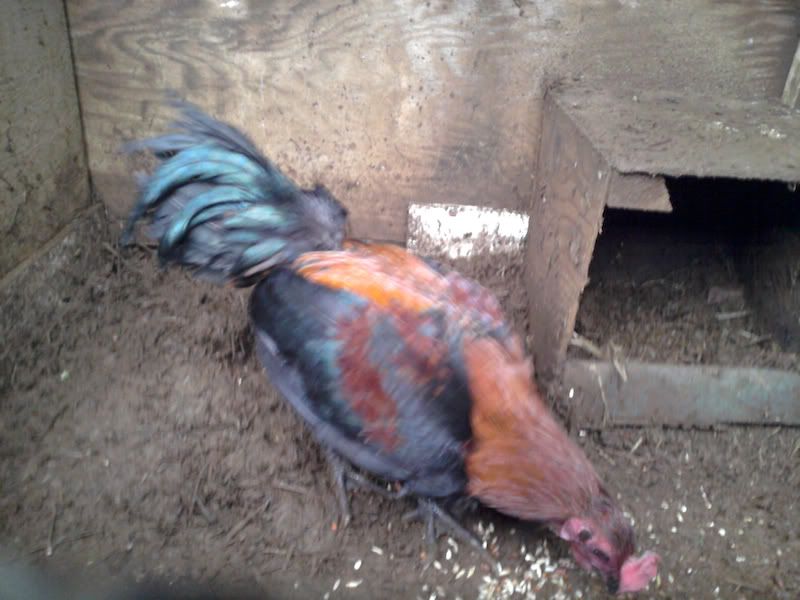
[ ] O-Shamo and Chu-Shamo are designations for different weight categories of large fowl, whereas the Nankin-Shamo is a bantam chicken. The Ko Shamo (シャモ), unlike O-Shamo and Chu-Shamo, is merely an ornamental breed not used for cockfighting, although it is bred to be temperamental and show the spirit of a fighter. While it is not related to the other breeds, it is often assumed to be because of the similarity of their names.
Domestic chickens ( Gallus gallus domesticus) fulfill various roles ranging from food and entertainment to religion and ornamentation. To survey its genetic diversity and trace the history of domestication, we investigated a total of 4938 mitochondrial DNA (mtDNA) fragments including 2843 previously published and 2095 de novo units from 2044 domestic chickens and 51 red junglefowl ( Gallus gallus). To obtain the highest possible level of molecular resolution, 50 representative samples were further selected for total mtDNA genome sequencing.

A fine-gained mtDNA phylogeny was investigated by defining haplogroups A–I and W–Z. Common haplogroups A–G were shared by domestic chickens and red junglefowl. Rare haplogroups H–I and W–Z were specific to domestic chickens and red junglefowl, respectively.
We re-evaluated the global mtDNA profiles of chickens. The geographic distribution for each of major haplogroups was examined. Our results revealed new complexities of history in chicken domestication because in the phylogeny lineages from the red junglefowl were mingled with those of the domestic chickens. Several local domestication events in South Asia, Southwest China and Southeast Asia were identified. The assessment of chicken mtDNA data also facilitated our understanding about the Austronesian settlement in the Pacific. Introduction Being the most extensively distributed of the poultries, the domestic chicken ( Gallus gallus domesticus) provides humans with a stable sources of protein, including both meat and eggs ().
The chicken has a long history of anthropomorphic usage in Southeast and East Asia, where it has been bred for entertainment (cockfight) and ornamentation (). The domestic chicken also serves as an important model animal in biomedical research (). Although humans derive much benefit from this poultry, its history of domestication remains open to debate. Since the times of Charles Darwin (), the origin and domestication of chickens has attracted wide interest from multiple disciplines (; ). A massive amount of research has focused on reconstructing the matrilineal history of domestic chickens using mitochondrial DNA (mtDNA) sequence data. These efforts document that the red junglefowl ( Gallus gallus) is the primary wild ancestor of the domestic chicken (, ). The multiple, independent domestication events in southern China, South Asia and Southeast Asia involve several matrilines (; ).
Most studies of chicken mtDNA rely on sequences of (partial) control region ( CR; D-loop: nucleotide position 1–1232; NC_007235). The relatively small size of CR limits the resolution of the mtDNA phylogeny. Because the mutation rate in this region is higher than that in coding regions, high levels of recurrent mutations can blur the structure of the matrilineal genealogy. Recent, fine-gained analyses have used the complete mtDNA genome to reconstruct the history of animal domestication, such as in cattle (,; ), dogs (), horses () and pigs (). These updated phylogenies provide new insights into the origins and history of domestication.